

Why the same advice works for your friend but not for you
You have tried the productivity hacks. You have read the same five books everyone recommends. You have followed the exact morning routine some influencer swears by.
Some of it worked for a week. Then it did not.
Here is the real problem. That advice was never built for you. It was built for whoever the author was picturing when they wrote it, and that person is not you.
Self awareness, understanding how you naturally think, decide, and respond to stress, is what makes advice actually stick, because it tells you which tips fit your wiring and which ones never will. That single shift changes everything about how you approach personal growth.
This post breaks down why generic advice keeps failing you, what your natural wiring actually controls, and one small way to start noticing your own pattern this week.
Why does the same advice work for one person and fail another?
The same advice can work for one person and fail another because people process decisions, stress, and motivation through different natural patterns, not through different amounts of willpower. A friend who thrives on rigid schedules and a friend who needs flexibility are not failing the same plan differently. They were never using the same plan.
Think about the last time a friend recommended a habit tracker, a cold shower routine, or a strict five AM wake up call. It worked for them. You tried it. Within a week, you felt like you were failing at something that was supposed to be simple.
You were not failing. You were running someone else's operating system on your own hardware.
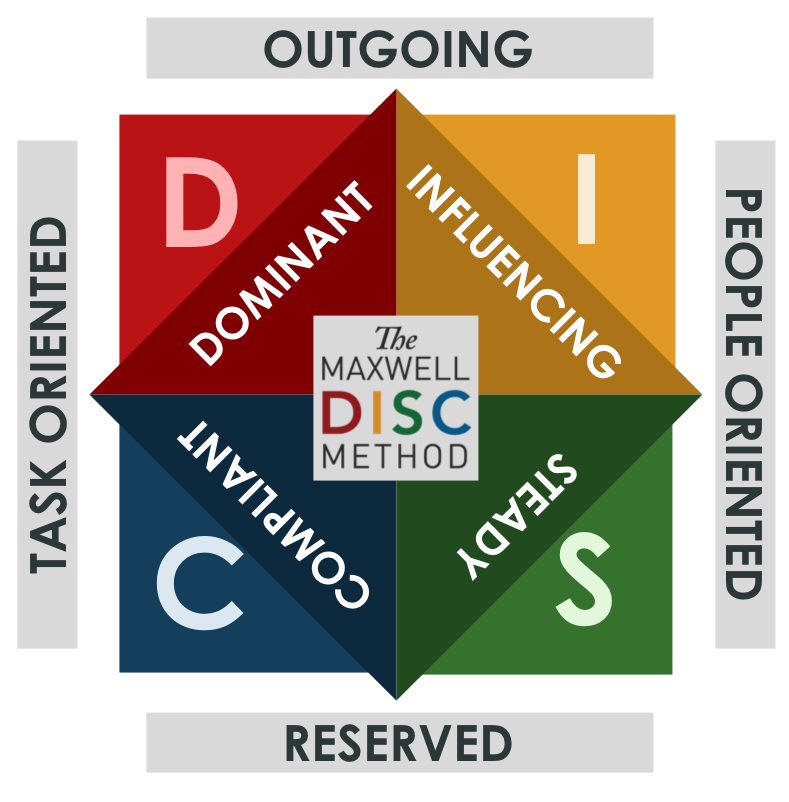
The Maxwell DISC framework names four core behavior styles, Dominance, Influence, Steadiness, and Conscientiousness, each with a different relationship to structure, risk, and pace. A high Steadiness person and a high Dominance person can read the exact same productivity book and walk away needing opposite next steps.
What does your natural wiring actually control?
Your natural wiring controls how you make decisions, handle stress, and stay motivated, three areas where one size fits all advice quietly sets you up to fail. Knowing your pattern here is the difference between forcing a system and finding one that fits.
Decision making is the clearest example. Some people decide fast and adjust later. Others need more information before they move, and rushing them produces worse choices, not faster ones. Neither approach is wrong. They are just different starting points.
Stress response works the same way. One person under pressure gets quiet and needs space to think. Another gets vocal and needs to talk it out loud. A stress management tip built for the first type can feel completely useless, even harmful, to the second.
Motivation follows the same pattern. Some people are fueled by competition and visible progress. Others burn out fast under that exact same pressure and need steady, private wins instead.
A simple way to start noticing your own pattern
You do not need a full assessment to start noticing your own pattern. Try this for one week.
Track one decision each day. Write down what you decided and how fast you decided it. After a week, look for the pattern, not the outcome.
Name one stress moment each day. Note whether you wanted to talk it out or go quiet and think. Both are valid. You are just collecting data on yourself.
Notice what actually motivated you each day. Was it a deadline, a person checking in, a visible checklist, or quiet private progress. Circle whichever one shows up most.
At the end of the week, you will have a rough sketch of your own operating system, built from your own behavior instead of someone else's advice.
For a clearer, faster picture, the Momentum Styles Report walks through this same idea using the Maxwell DISC framework, with a short debrief to help you apply it to whatever you are working on right now.
FAQs: How you're wired and self awareness
Q: What is a DISC assessment? A: A DISC assessment measures four behavior styles, Dominance, Influence, Steadiness, and Conscientiousness, to show how someone naturally makes decisions, communicates, and responds to pressure.
Q: Can my natural style change over time? A: Your core wiring stays fairly stable, but how you express it shifts with context, role, and stress level. Awareness of the pattern matters more than trying to change it.
Q: Is one DISC style better than the others? A: No single style is better. Each style solves different problems well. The goal is knowing your own pattern, not ranking it against anyone else's.
Q: How is this different from a personality quiz I'd find online? A: A free online quiz gives you a label. A structured framework like Maxwell DISC, paired with a real debrief, shows you what to actually do with that information in your daily decisions.
You are not the problem. The mismatch is.
Generic advice was never going to fit everyone, because it was never built with your wiring in mind. Once you know your own pattern, the next step stops being a guessing game.
Start with the free guide below. It walks you through five small moves that work with how you naturally operate, not against it.
I Believe In Your Greatness. Your Path To Limitless Growth!