

What to Do When You Feel Stuck and Overwhelmed in Your 20s (When Motivation Isn't the Problem)
Why Feeling Stuck in Your 20s Isn't a Motivation Problem
You are not lazy. That is the first thing to get straight.
There is a difference between not wanting to do something and not knowing what to do next. Most people mix these two up. They think if they just watch one more video or read one more list of morning habits, the fog will clear. It does not work that way.
More hustle content usually makes overwhelm worse. It adds another voice telling you what you should be doing, on top of everything else already crowding your head. You do not need more input. You need less noise and one clear next step.
The real problem is usually this: too many open loops running at the same time with no order to them. Career, relationships, money, health, family expectations, your own expectations. All open. None resolved. Your brain treats every one of them like it needs attention right now, so you freeze instead of moving on any of them.
The Hidden Cost of Staying Stuck
Overwhelm does not stay in one lane. It leaks.
You put off one decision at work, and now you are also short with your roommate. You skip the gym because you are "too tired to think," but the tired is mental, not physical. Every stalled decision drains a little confidence, and low confidence makes the next decision even harder to make. This is how a bad week turns into a bad quarter.
There is also a quieter cost. Every time you watch yourself avoid something, you collect a small piece of evidence that you cannot be trusted to follow through. That evidence adds up. It becomes the story you tell yourself about who you are, even if it is not true.
And here is the trap: waiting for clarity to show up before you act almost never works. Clarity shows up after you move, not before. If you keep waiting, you keep stalling.
Diagnose Before You Prescribe: Find Out What's Actually Stuck
Generic advice fails because it treats every kind of stuck the same way. It is not the same.
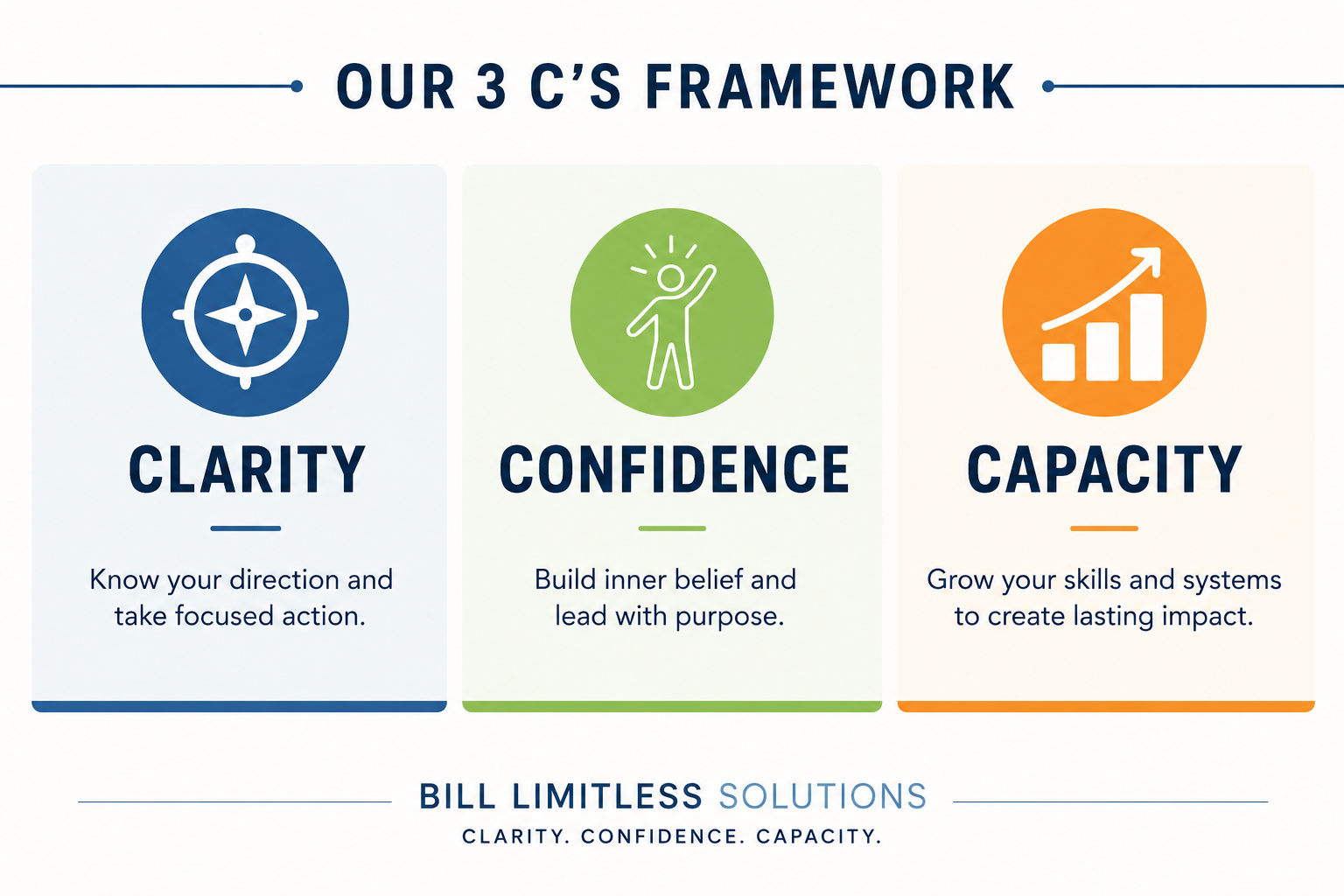
Some people are stuck because they genuinely do not know what they want. That is a clarity problem. Some people know exactly what they want but do not believe they can pull it off. That is a confidence problem. Some people have the clarity and the confidence, but life has them stretched so thin there is no room left to act. That is a capacity problem.
"Just start" only works for one of these three. For the other two, it can actually make things worse.
Here is a quick way to check yourself. Think of the thing you have been avoiding for more than two weeks. Ask:
Do I not know what to do about this, or do I know and just have not done it?
If I knew for certain I would not fail, would I already be doing it?
Do I have the time and energy to act on this right now, or am I already maxed out?
Your answer points to what kind of stuck you are actually dealing with.
The One Thing to Do First When You Feel Overwhelmed
Skip the five-year plan. It will not save you right now.
What works is picking one small, specific, measurable next step and doing it today or this week. Not "get healthier." Not "figure out my career." Something you could finish in under an hour, something with a clear finish line.
The size matters more than people think. If the step is too big, it becomes just another open loop, and you are back where you started. A good next step should feel almost too small to matter. That is usually a sign it is sized right.
Watch out for the planning trap. Making a plan feels productive. It gives you a little hit of relief because it feels like progress. But a plan you never act on is just a longer way of staying stuck. One real step beats ten planned ones.
How to Build Momentum Without Burning Out
Once you take that first step, the goal is not to sprint. It is to not stop.
Consistency beats intensity every time when you are rebuilding direction. A string of small, doable actions builds trust with yourself faster than one big burst of effort that fizzles out in a week. Momentum is built the same way debt is built, just in reverse. Small deposits, made regularly, compound.
Structure your wins so they build on each other instead of resetting to zero. If this week's step was sending one email, next week's step should connect to it, not start a brand new thread. Progress needs a thread to follow.
Track it, but track it in a way that builds confidence instead of pressure. A simple checklist or short weekly note works better than a rigid system that punishes you for missing a day. The goal is evidence that you follow through, not another way to feel behind.
When to Get Outside Structure (And Why That's Not a Weakness)
Self-diagnosis has limits, especially when you are the one stuck inside the problem.
It is hard to see your own blind spots when you are overwhelmed. That is not a character flaw. It is just how being inside a situation works. Structured tools, like a real assessment of how you are wired or a framework built for exactly this kind of stuck, can show you things that willpower alone cannot.
If you have tried to figure this out on your own more than once and keep landing back in the same spot, that is not proof you are broken. It is a signal that the next move is getting outside eyes on it, not trying harder alone.
Your Next Step Starts Today
Feeling stuck is not a character flaw. It is a diagnosis problem, and once you know what kind of stuck you are dealing with, the next step gets a lot clearer.
If you want a simple framework to find that one next step, download From Stuck to Moving: 5 Moves to Get Unstuck This Week. It is free, it takes a few minutes to work through, and it is built to get you moving today, not someday.